Présentation du produit
At present, the conventional QJ44 double-arm DC bridge is widely used in power system to measure contact resistance, but the testing current of this kind of bridge is only mA level, so it is difficult to find the defect of reducing the cross-sectional area of the loop conductor. When measuring the contact resistance of the conductive circuit of the high voltage switch, due to the influence of the oil film and oxide layer between the contacts, the measured value is several times too large to truly reflect the contact resistance value. To this end, the latest Ministry of Power standard DL/T845.4 -- 2004 "resistance measuring device general technical conditions: Circuit Resistance Tester and the new version of Verification regulation JJG1052-2009 "Circuit Resistance Tester and DC Resistance Tester Verification Regulation" stipulate that the measuring current of contact resistance such as switch (isolation) and circuit breaker shall not be less than 100A DC and the minimum current maintenance time shall not be less than 60S to ensure the accuracy of test results.
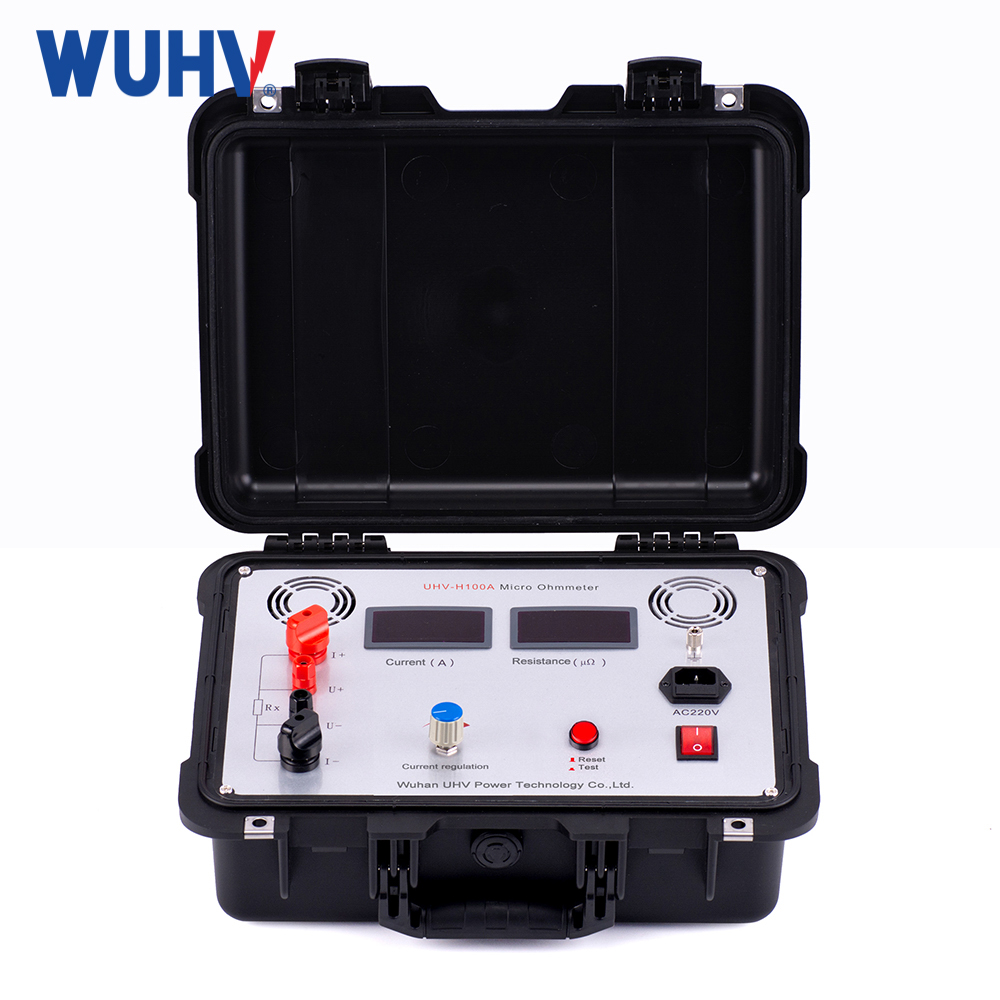
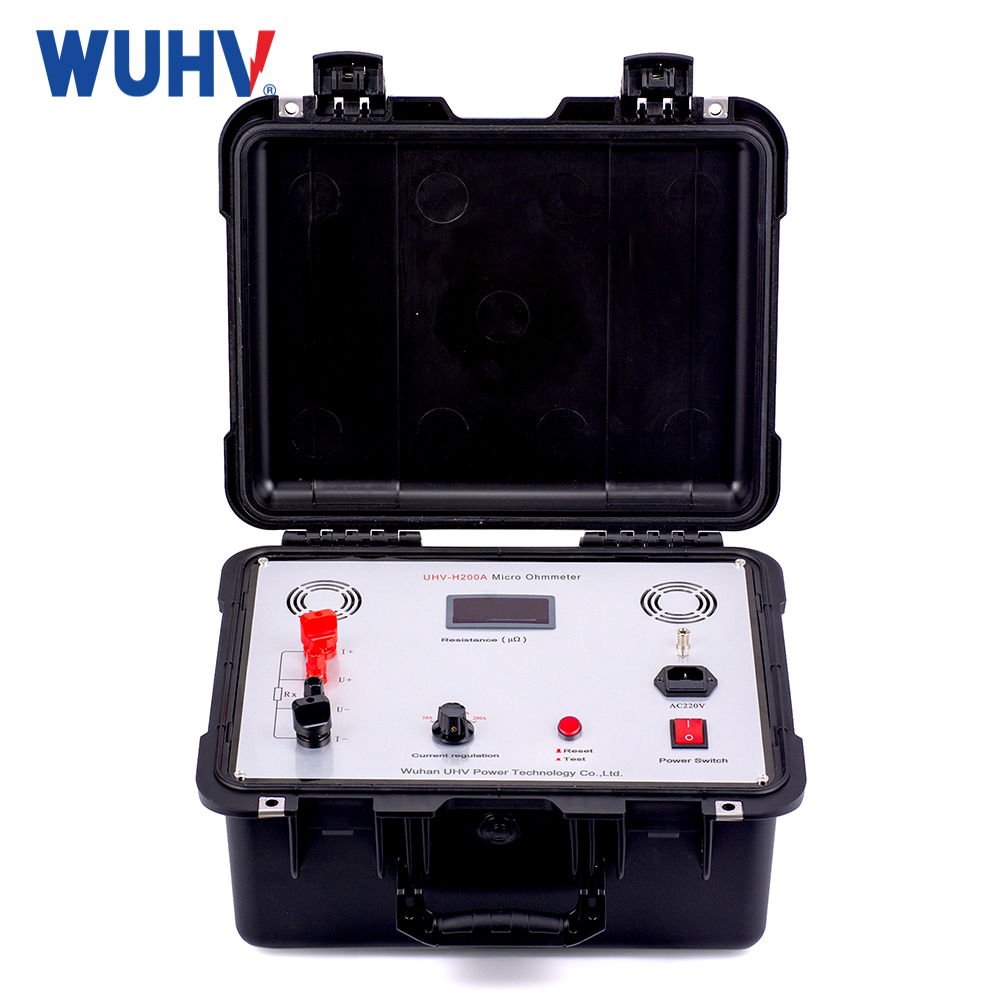
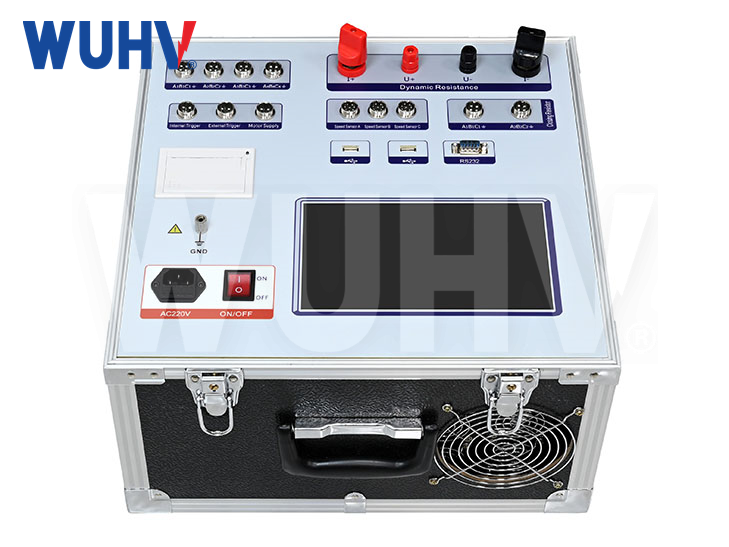
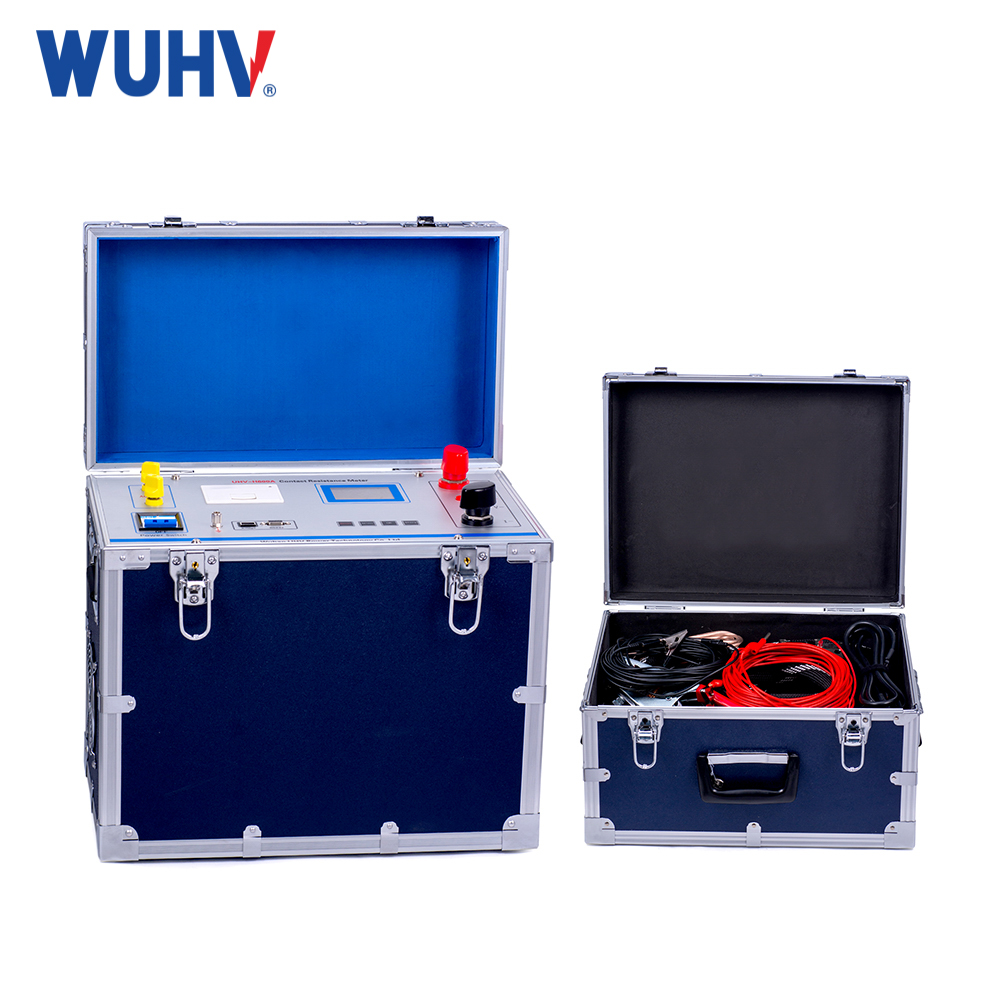
The loop resistance tester manufactures operating panel adopts ergonomic design, in line with operating habits, the use of high frequency switching power supply and digital circuit technology, suitable for the measurement of switching control equipment circuit resistance. The test current is 100A DC recommended by the national standard. The circuit resistance tester can be measured directly under the DC 100A condition, the test results are displayed with a large screen LCD, and has data storage, output printing, time setting and other functions, and another 50A gear for users to choose; Is the only domestic can reach 0.01μΩ resolution and very stable contact resistance tester, performance more than imported large current micrometer. Meet the requirements of high voltage switch maintenance and circuit resistance test in power and power supply departments.
Application scenarios
High-voltage circuit breaker contact resistance testing — Detects whether the main circuit contact of the circuit breaker is in good condition, identifying issues such as contact wear, oxidation, and poor contact.
Disconnecting switch / load switch contact resistance testing — Checks the contact condition of switches to prevent heating faults caused by excessive contact resistance.
High and low voltage switchgear loop resistance testing — Detects contact resistance at the main circuit, busbar connection points, and other locations in switchgear.
Substation equipment preventive maintenance — Used for periodic maintenance and testing of high-voltage switchgear.
Cable line DC resistance testing — Measures low resistance of cable lines and their connection parts.
Busbar / high-current connection point resistance testing — Checks whether there is poor contact at high-current conductive connection points such as busbars and copper bars.
caractéristiques du produit
1. High-Current Output
Compact and lightweight, the contact resistance tester manufactures is easy to transport and ideal for both laboratory and field applications.
 |  |
Technical Parameters:
| Plage de mesure | 50A 0~10mΩ |
| 100A 0~5mΩ | |
| Résolution | 0~99.99μΩ, 0.01μΩ |
| 100.0~10000.0μΩ, 0.1μΩ | |
| Courant d'essai | Sortie fixe à deux vitesses DC50A, 100A |
| précision de mesure | ±(0.5% rd+2d) |
| Operating Time Options | Quick, 10s, 30s, 60s |
| Méthode d'affichage | 4-inch touchscreen |
| mode de communication | Vidage du disque U |
| Puissance de travail | AC220V ± 10% 50Hz |
| Pouvoir total | 600W |
| Enregistrement de stockage maximum | 200 |
| environnement de travail | temperature: -10℃~40℃, humidity:≤80%RH |
| Dimensions | 390×300×150 mm3 |
| Poids | 6kg(No attachments) |
FAQ about Contact Resistance Tester
Q: Why do high-precision loop resistance testers typically use high-current output?
A: High-precision loop resistance tester factory output a stable high current to effectively reduce the influence of environmental noise and lead resistance during contact resistance measurement, thereby achieving more accurate test results. A higher test current also more accurately reflects the conductive performance of circuit breakers, disconnecting switches, and busbar connection points under actual operating conditions.
Q: How does the test current level affect the measurement results?
A: Properly increasing the test current can reduce errors caused by unstable contact resistance and improve the consistency of measurement data. However, the test current should comply with the rated requirements of the equipment to avoid local heating of the device under test or safety risks due to excessive current. In practice, the appropriate test current level should be selected based on the equipment type and industry standards.
Q: How to select a suitable high-precision loop resistance tester for specific application needs?
A: When selecting a model, factors such as maximum output current, measurement range, resolution, measurement accuracy, data storage capacity, and portability should be comprehensively considered. For long-term on-site testing in substations or large industrial environments, attention should also be paid to the equipment's protection rating, battery life, and software compatibility to meet varying test conditions and future maintenance requirements.
The UHV-H100P is a reliable contact resistance tester designed for testing circuit breakers, disconnectors, load switches, and switchgear in power systems. As an experienced manufacturer and supplier of electrical testing equipment, UHV provides high-quality testing solutions for both field maintenance and factory applications. For the latest UHV-H100P price, specifications, availability, and customized requirements, please contact UHV for a competitive quotation and professional technical support.