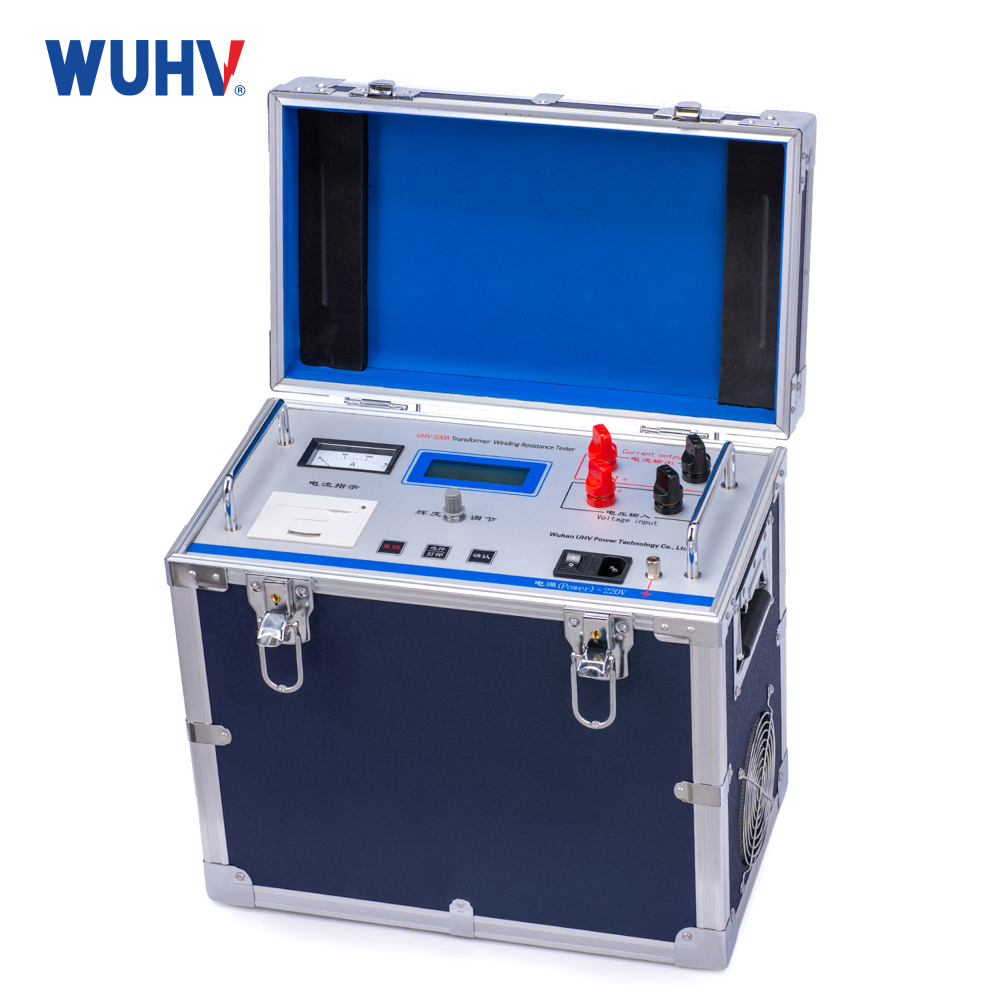
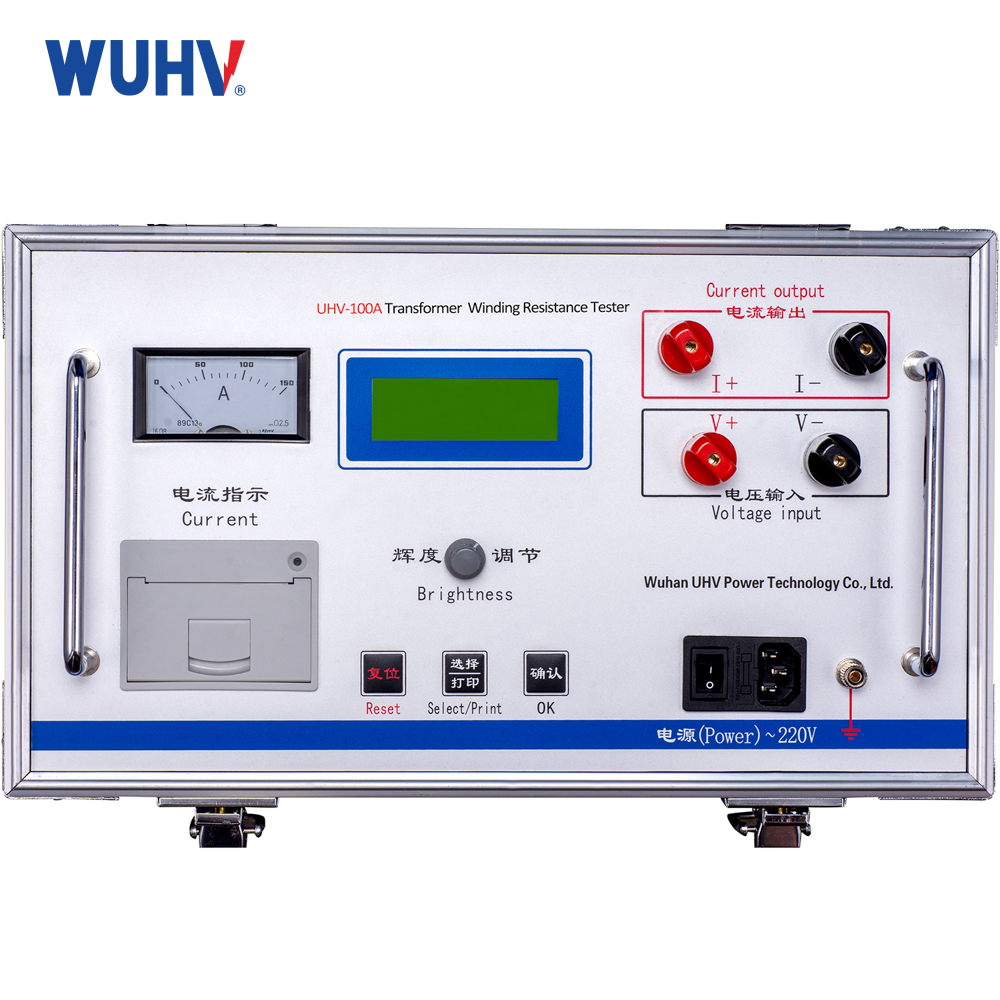


Présentation du produit
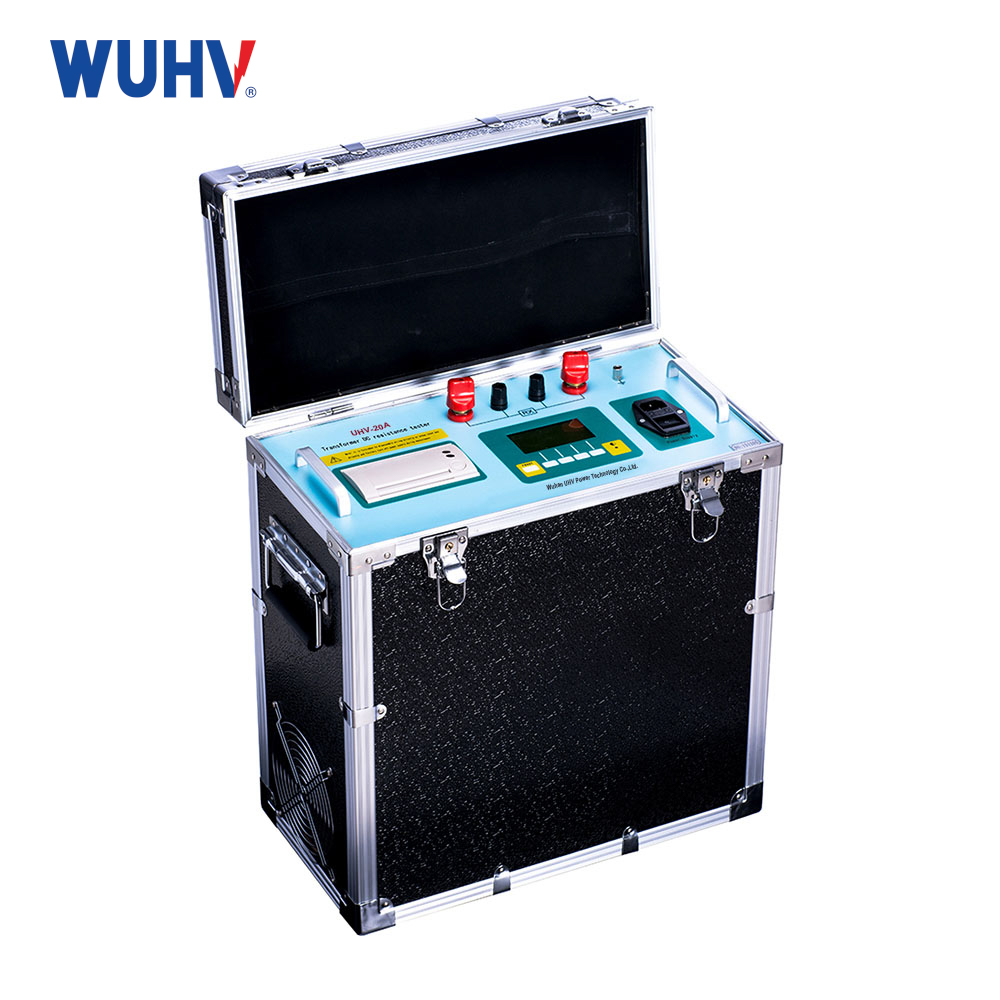
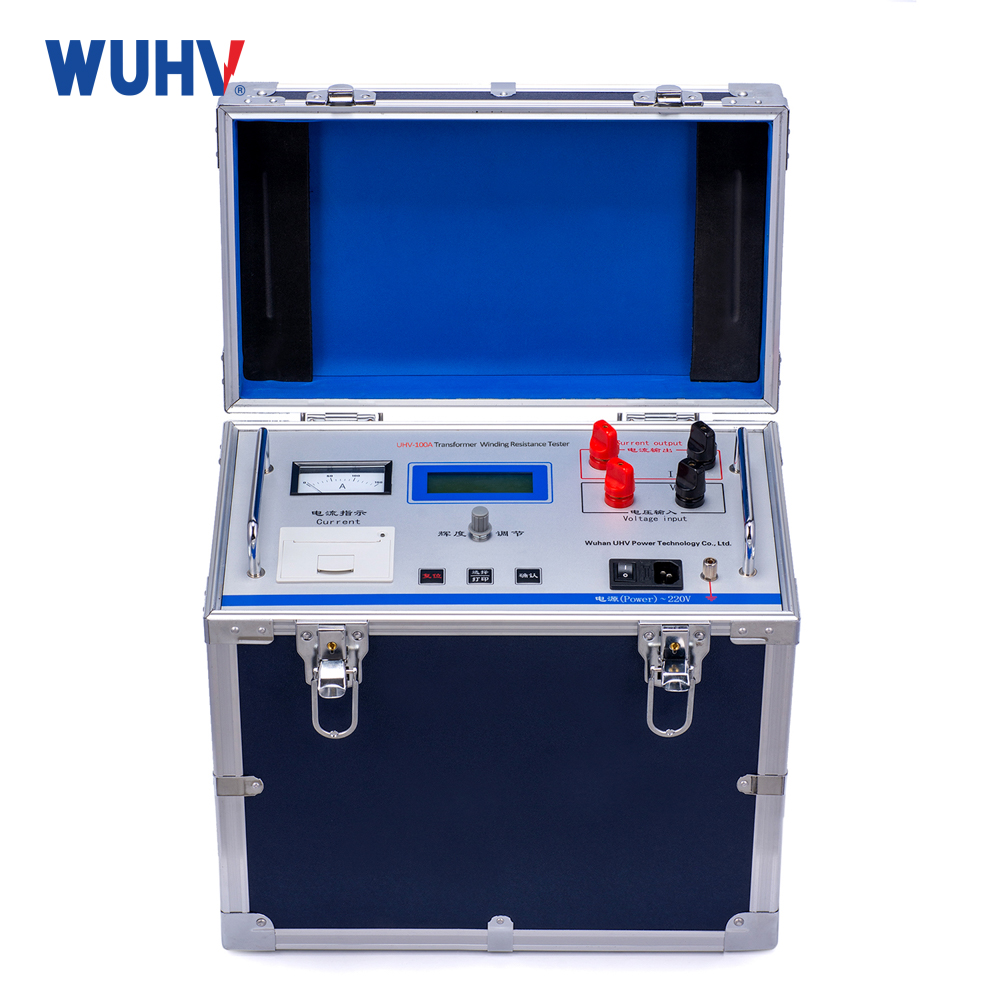
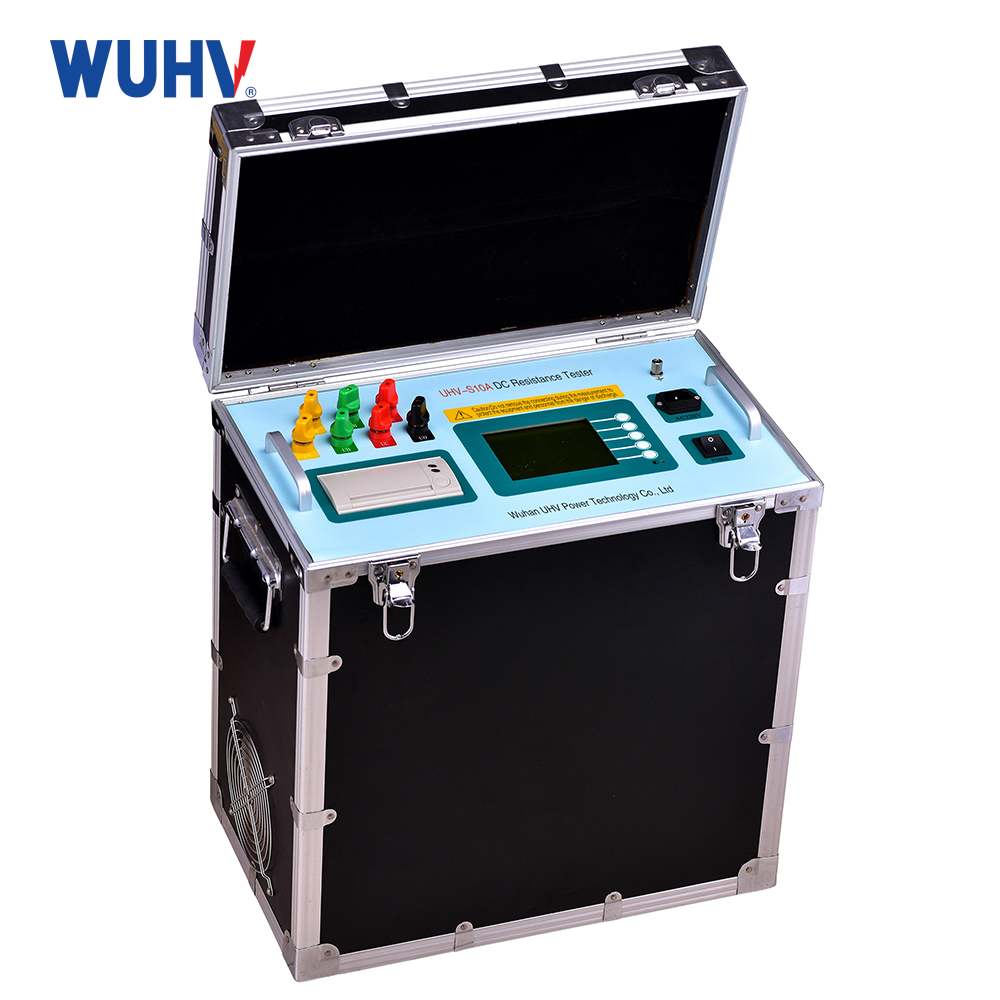
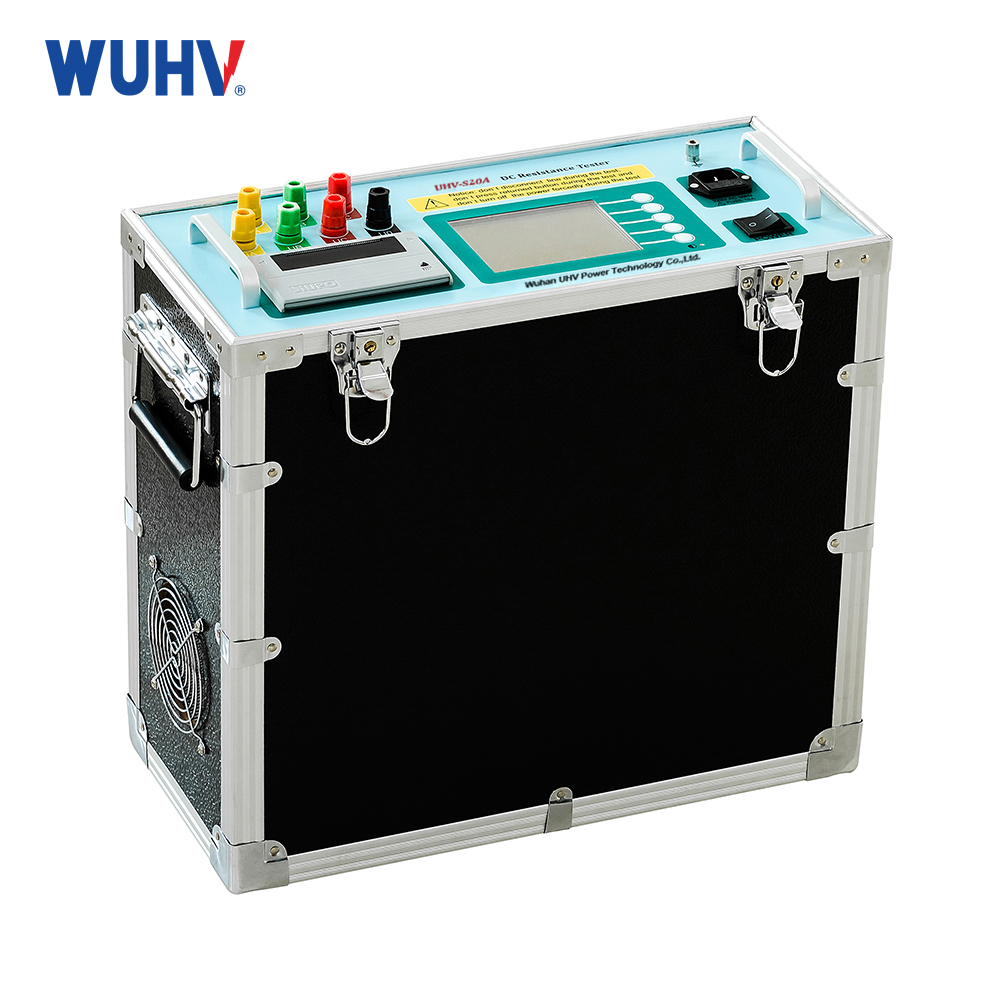
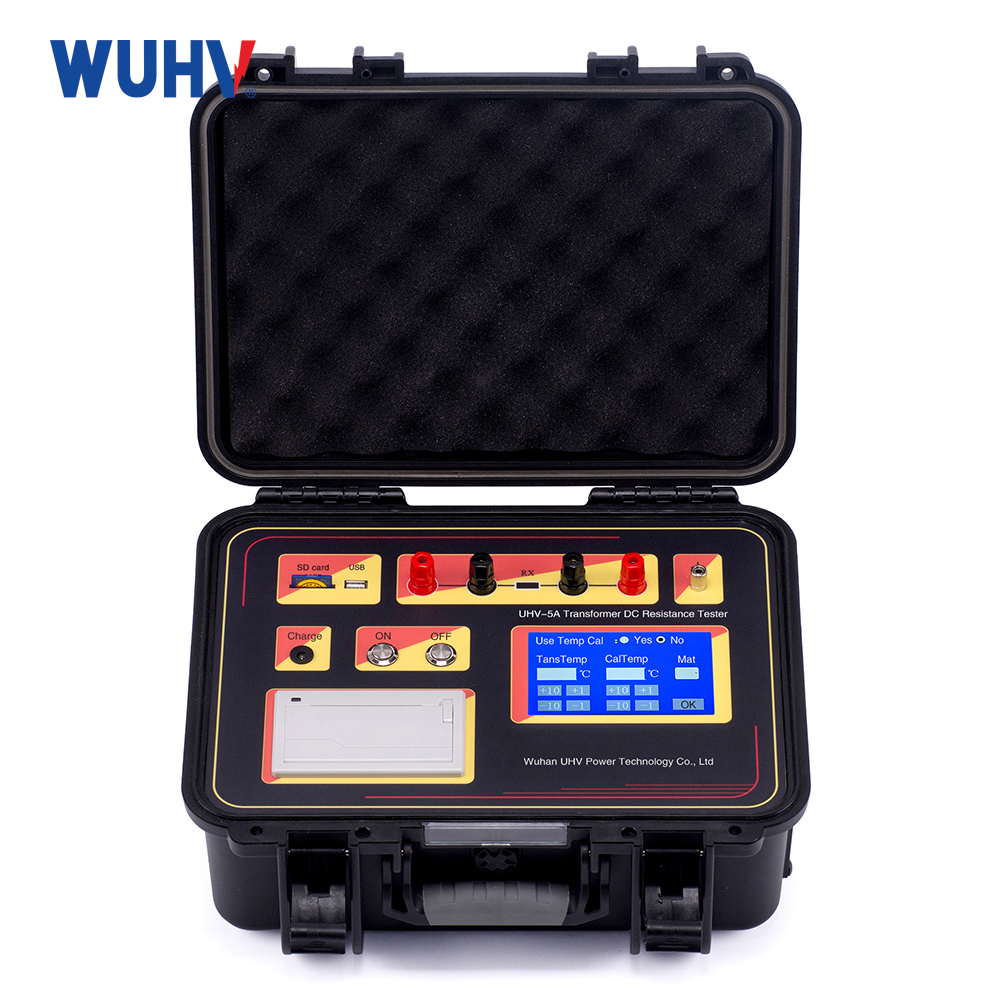
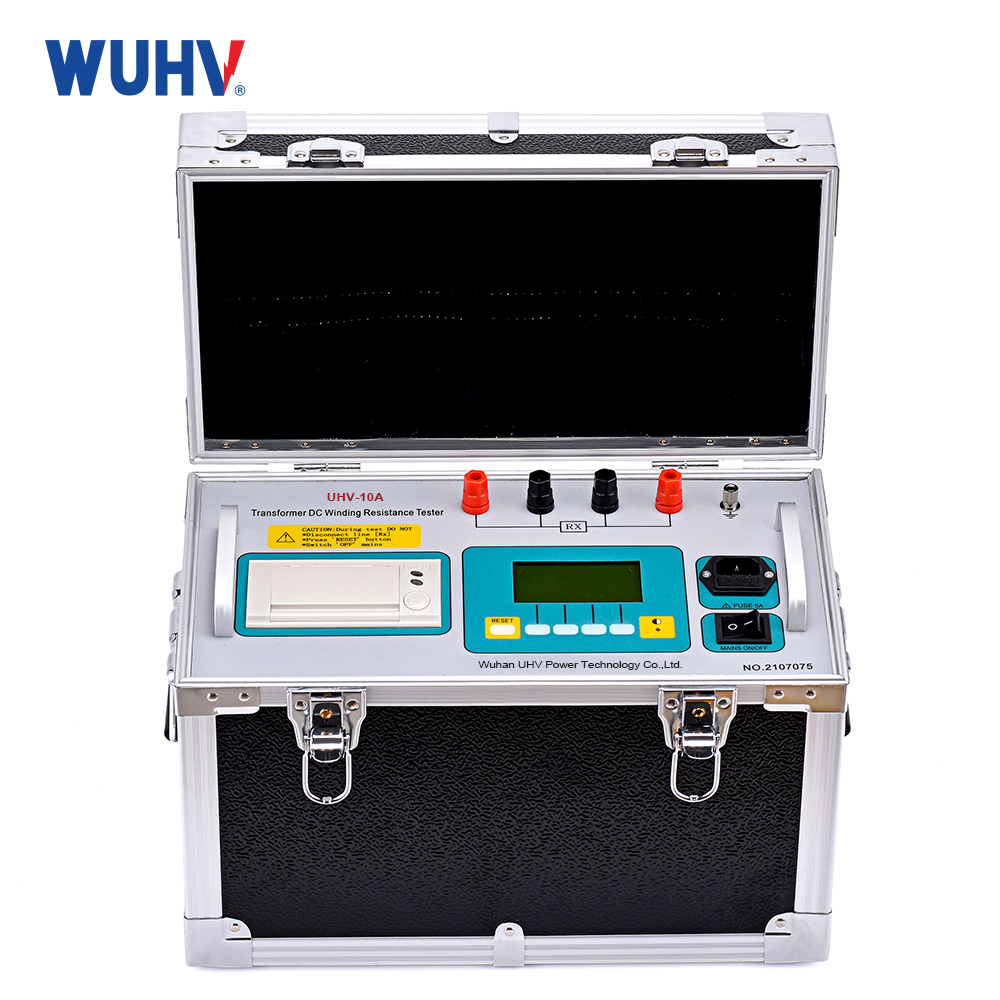
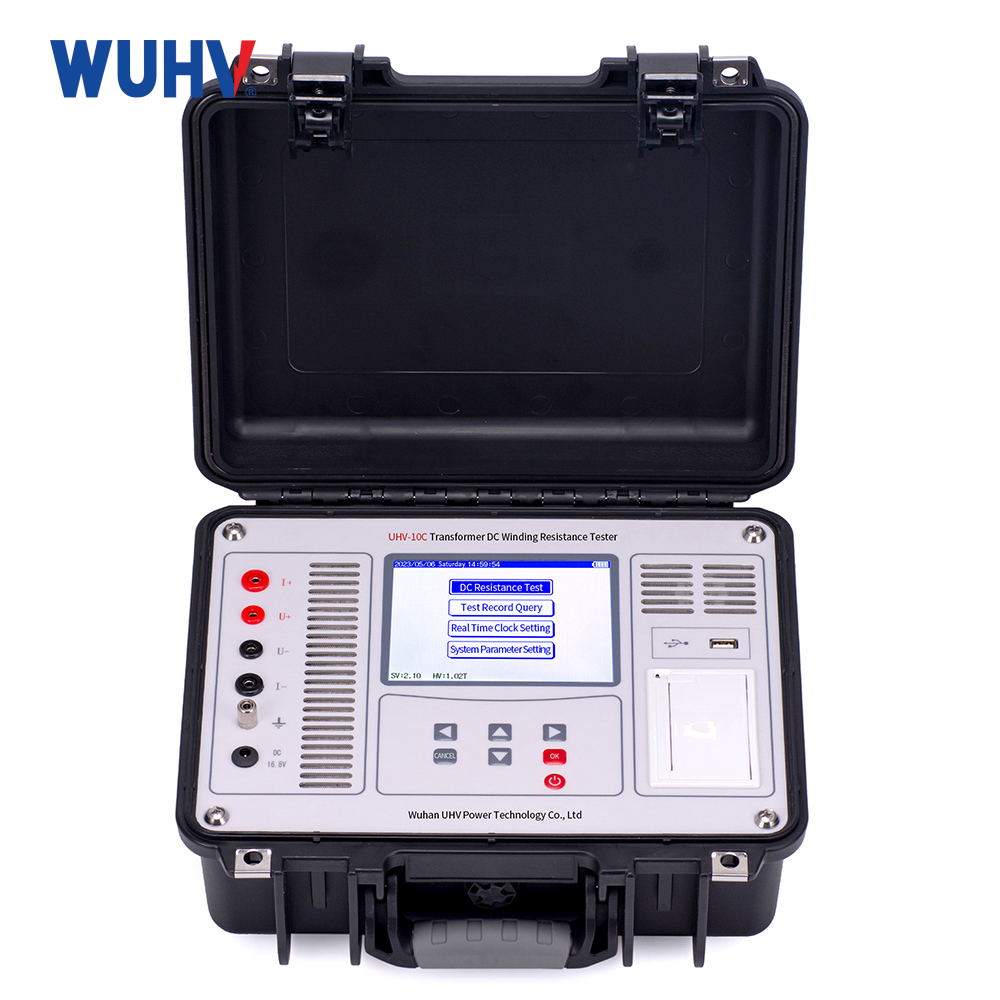
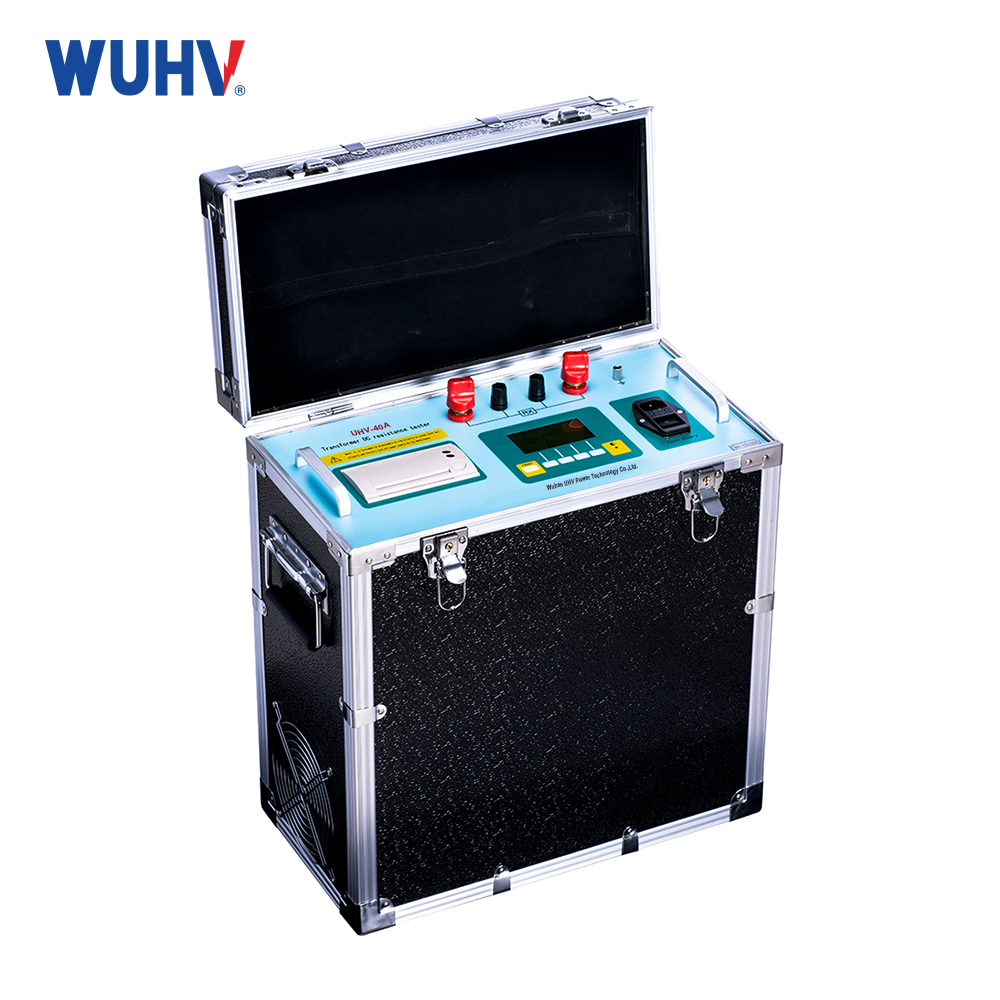
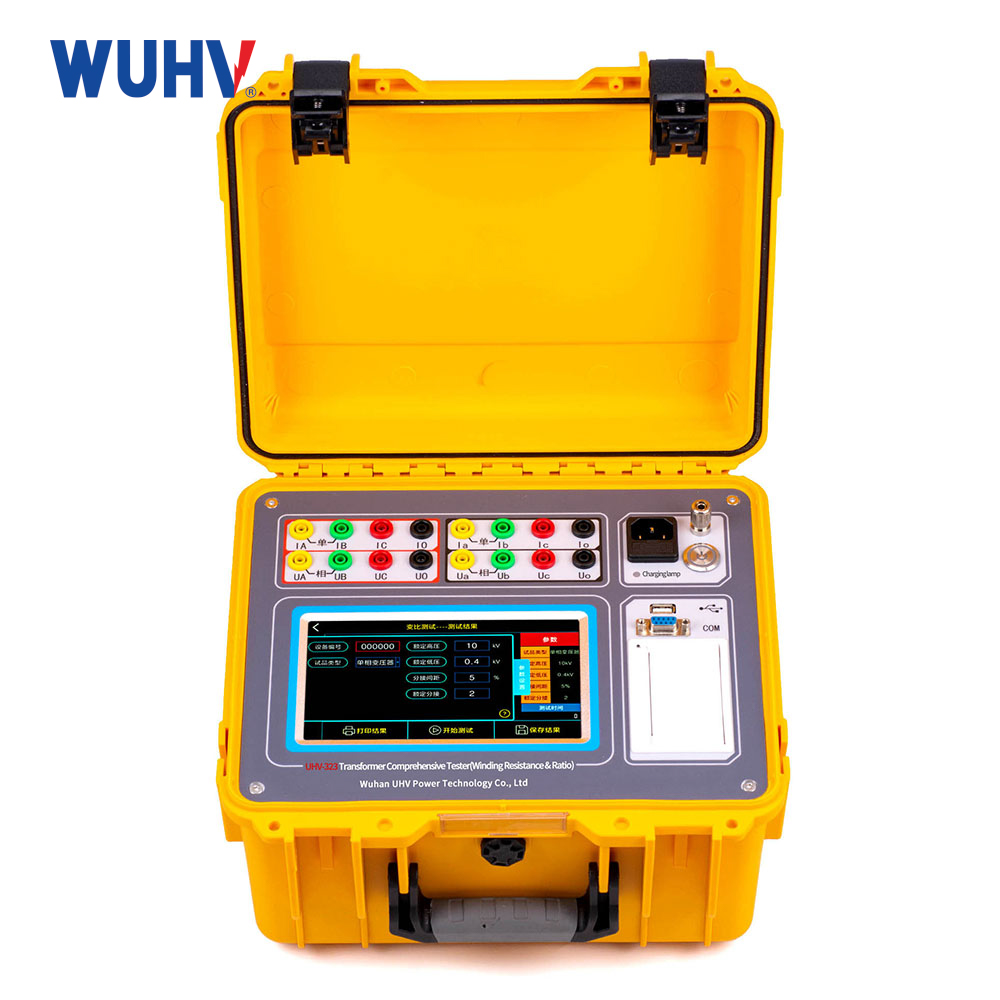
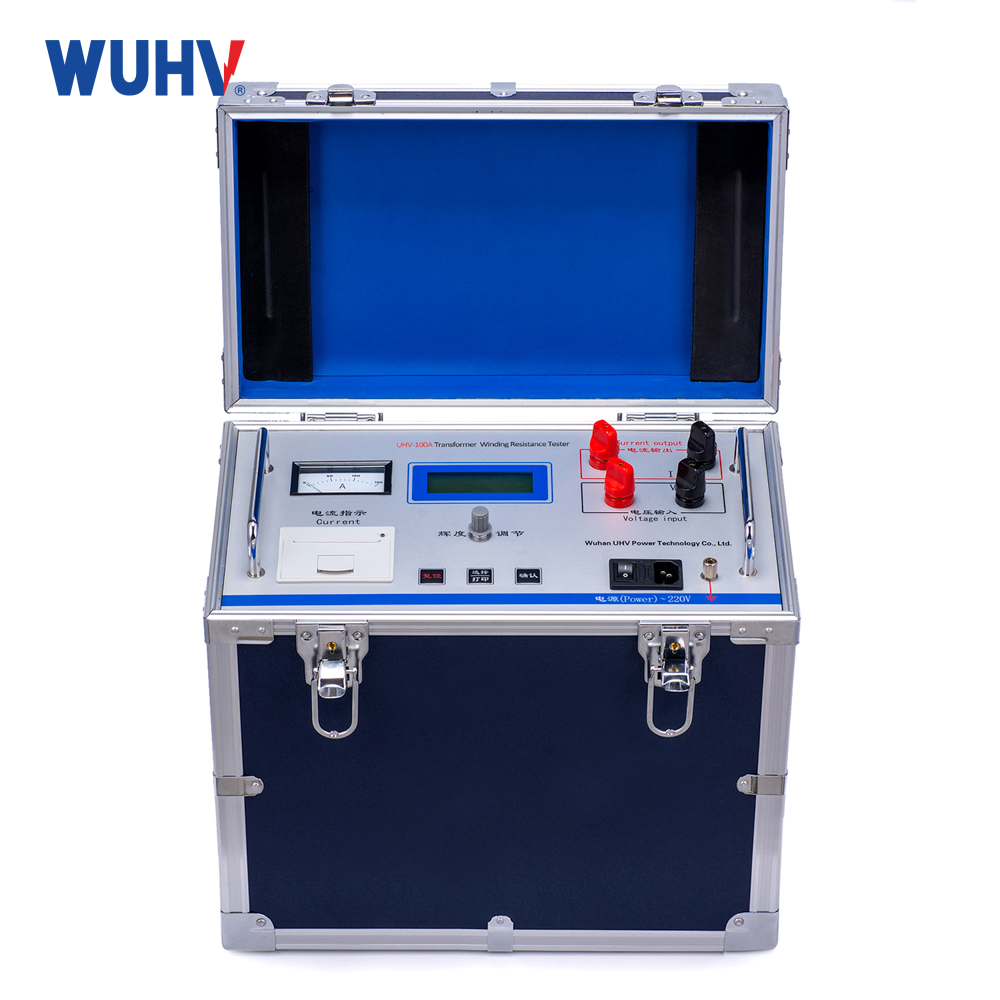
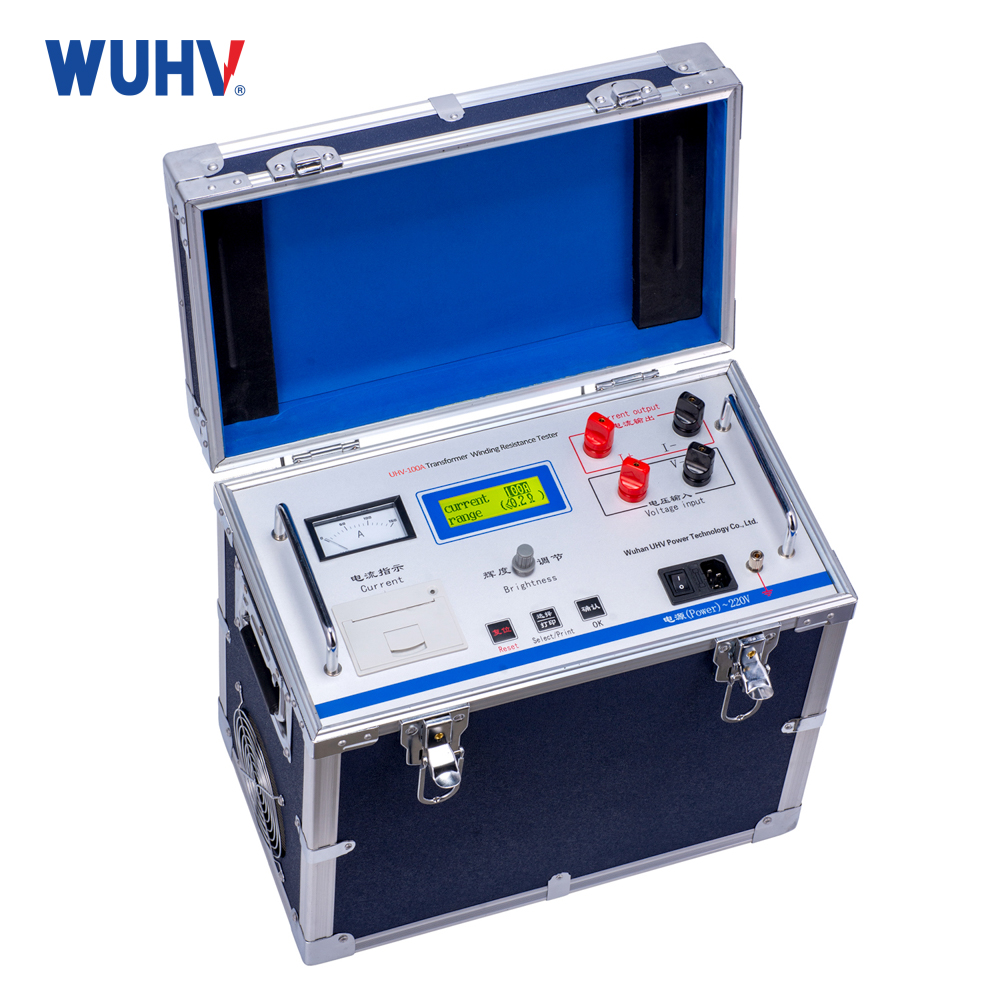
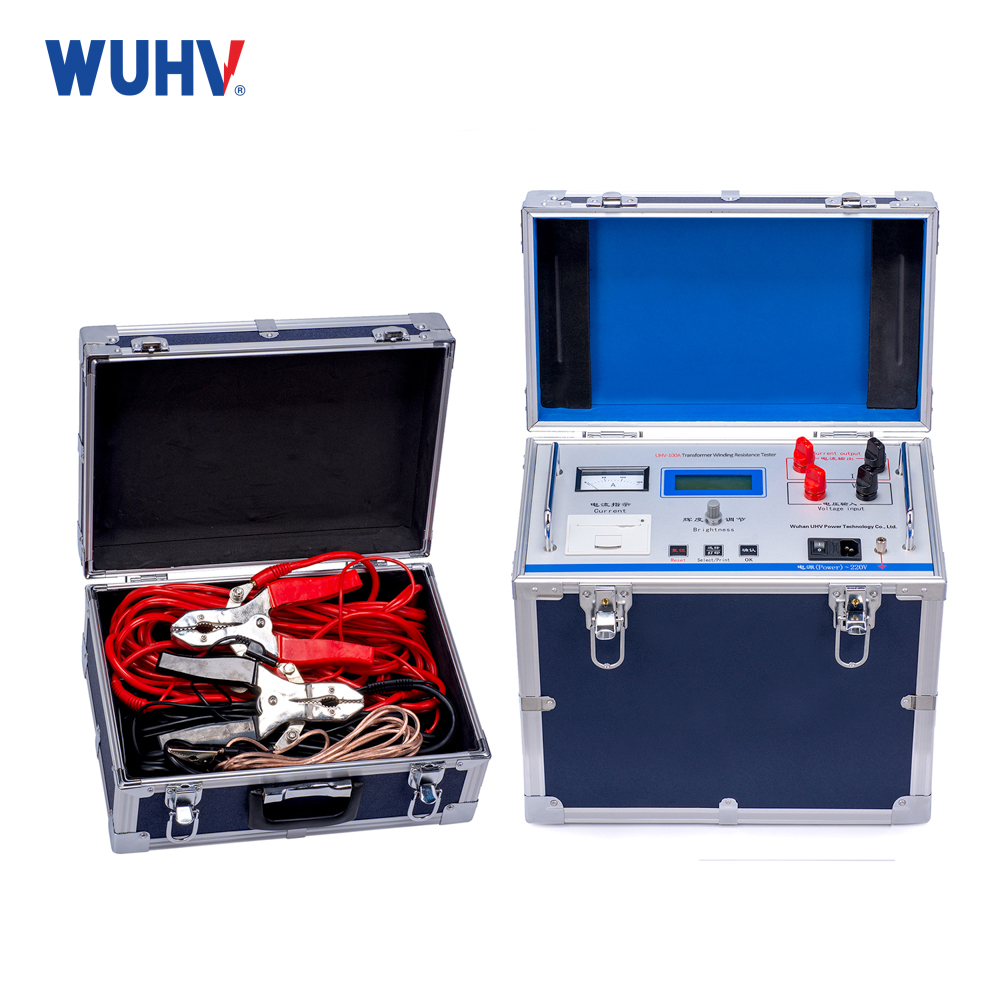
Transformer dc resistance tester is a necessary test project of transformer manufacturing for semi-finished products and finished products, including factory test, installation, overhaul, pick up switch, pick up test and preventive test of electric power department. You can check whether the welding of the group pick upquality and the turn-to-turn short-circuit of the winding of the group, check whether the pick up touch is good at various positions of the sub-pick up switch in voltage, and whether the actual position of the sub-pick up switch is consistent with the indicating position, so as to draw out whether the line is broken, and whether the multi-strand guide line and winding are broken, etc. In order to meet the needs of full transformer dc resistance fast measurement, our company develops a transformer dc resistance test apparatus. transformer dc resistance tester manufactures is adopts new power supply technology, featuring small volume, light weight, large current output, good repeatability, strong anti-interference ability and perfect protection function. The whole machine is controlled by high speed single chip microcomputer, with high degree of automation and automatic discharge and discharge alarm functions. Instrument test precision is high, operation is simple, and transformer direct resistance can be implemented with fast measurement.
Product functions
1. High-precision DC winding resistance measurement
Letransformer dc resistance tester supplier outputs a stable DC current to the winding under test and employs the four-terminal (Kelvin) measurement technique to accurately measure winding resistance from micro-ohm to ohm levels.
Primarily used to detect:
Winding DC resistance values
Three-phase resistance balance
Conductor continuity
Connection and soldering quality
2. Multiple test current output levels
Depending on the transformer capacity, the transformer dc resistance tester factory provides multiple output current options:1 A,5 A,10 A,20 A,40 A,50 A,100A.
Higher output currents can shorten the magnetization time for large transformer windings, improving test efficiency.
3. Automatic current stabilization and fast testing
Designed for inductive loads, the dc resistance tester automatically regulates the output current to quickly reach a stable state.
Its advantages include:
Shortened waiting time
Improved measurement repeatability
Reduced human judgment errors
Enhanced on-site testing efficiency
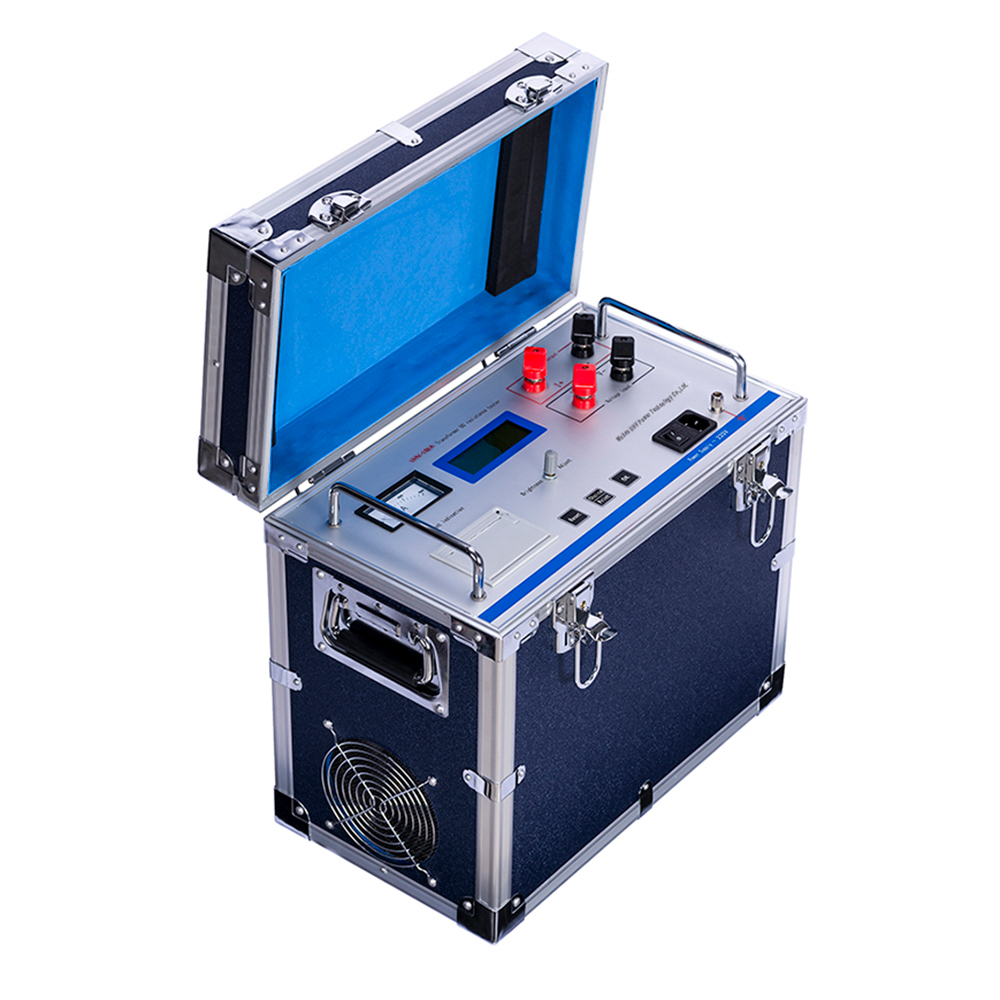 | 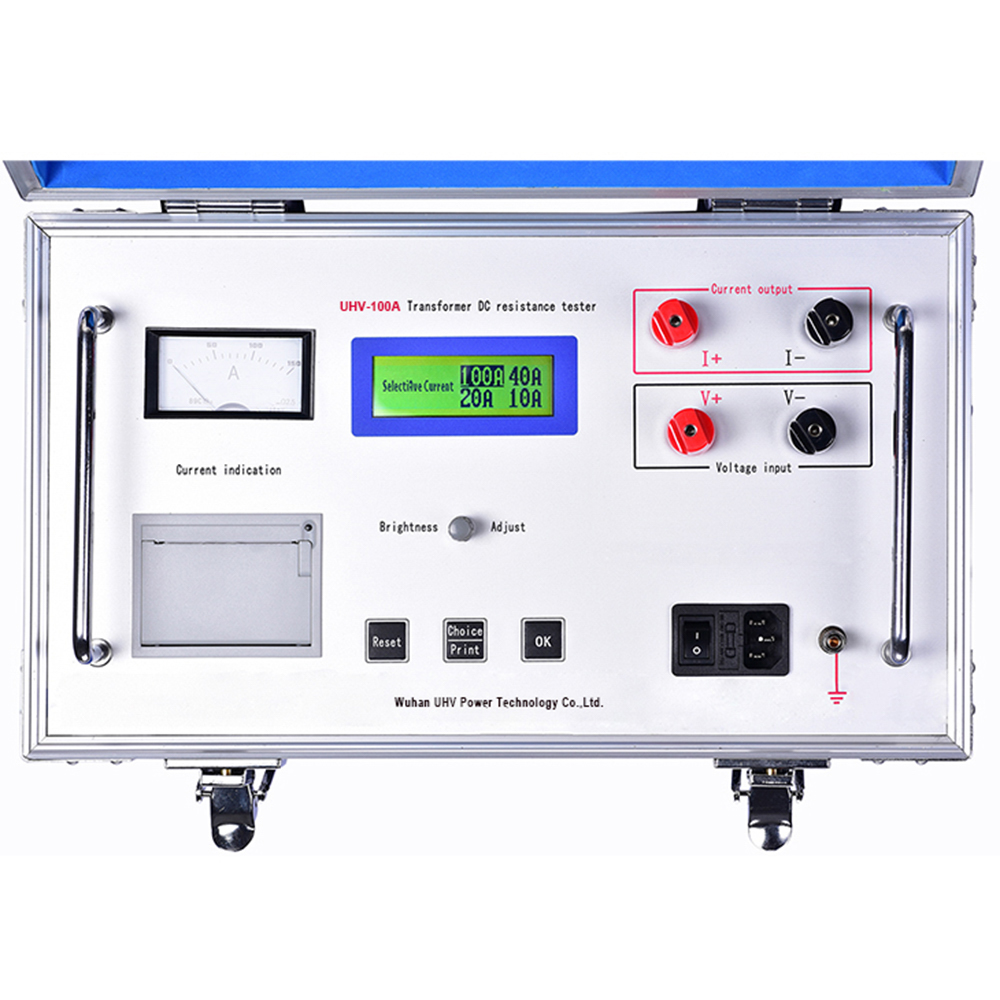 |
paramètres techniques
| Current range and range | 100A | 10μΩ~100mΩ |
| 40A | 50μΩ~500mΩ | |
| 20A | 100μΩ~1Ω | |
| 10A | 500μΩ~2Ω | |
| 5A | 1mΩ~4Ω | |
| Précision | ± (0.2%±2 words) | |
| Résolution | 0,1 mΩ | |
| Humidité ambiante | -10℃~40℃ | |
| Humidité relative | ≤80%RH No condensation | |
| Alimentation électrique fonctionnelle | AC220V ± 10% 50Hz | |
Product Characteristics
1、Whole machine is controlled by high-speed single-chip microcomputer, with high degree of automation and simple operation
2、Application of high frequency switch power supply technology, suitable for large and medium-sized transformerdc resistancemeasurement with large current output
3、Perfect protection function, can reliably protect the impact of counterpotential to instrument, and the performance is more reliable
4、with sound discharge alarm, clear discharge indication, reduce misoperation
5、With fast response time, the measurement state can be used to directly pick up switch with load points, and instrument can automatically refresh data
6、The vertical chassis structure is adopted to facilitate the use of scene
7、Intelligent power tube technology: instrument always works in the minimum power state, effectively reducing the heat inside instrument and saving energy. Work for hours without interruption
8、Dot matrix LCD, Chinese menu, printout
Application Scenarios
1. Factory testing and quality inspection of power transformers
After production is completed for distribution transformers, oil-immersed transformers, dry-type transformers, and large power transformers, DC resistance measurement is performed on high-voltage, low-voltage, and each tap winding to verify winding connection quality, soldering workmanship, and three-phase resistance consistency, ensuring products meet factory technical standards.
2. Substation equipment installation, commissioning, and acceptance
Before commissioning newly built or expanded substations, perform on-site winding DC resistance testing on transformers to check for winding damage, wiring abnormalities, or poor tap changer contact during transportation and installation, providing a reliable basis for safe equipment commissioning.
3. On-load tap-changer (OLTC) condition assessment
For maintenance and overhaul of on-load tap-changers in power transformers, measure winding resistance variations at different tap positions to evaluate switching mechanism and contact condition, promptly identifying potential faults such as increased contact resistance, contact wear, or unstable contact.
4. Power grid preventive testing and condition-based maintenance
During annual grid maintenance, preventive testing, and condition-based maintenance, perform periodic winding DC resistance testing on in-service transformers. By comparing with historical data, determine whether there are issues such as inter-turn short circuits, broken strands, loose connections, or aging in the windings, enabling equipment health condition assessment.
5. Maintenance testing of main and auxiliary transformers in power plants
Applicable for maintenance testing of main transformers, auxiliary transformers, and excitation transformers in thermal, hydro, nuclear, and new energy power plants. High-precision DC resistance measurement verifies winding and lead connection conditions, improving operational reliability of critical power equipment.
6. Maintenance of large electrical equipment in industrial enterprises
Widely used in steel, petrochemical, mining, cement, and rail transit industries for periodic testing of large power transformers, reactors, motor windings, and other equipment, helping maintenance personnel quickly locate winding defects and reducing the risk of unplanned outages.
7. Power equipment repair and major overhaul acceptance
After transformer factory repair, winding rewinding, lead replacement, or major overhaul completion, DC winding resistance testing verifies repair quality and confirms that winding parameters for each phase have returned to normal, providing technical basis for returning the equipment to service.
FAQs
Q: What is a transformer DC winding resistance tester? Why is it an important device in transformer testing?
A: Transformer dc winding resistance tester manufactures is a specialized testing device that calculates winding DC resistance by applying a stable DC current to the windings and measuring the voltage drop. It is primarily used to evaluate the electrical continuity of winding conductors, lead connections, and tap changers. It can help identify issues such as poor contact, broken conductor strands, soldering defects, and three-phase resistance imbalance. It is an important testing tool in transformer factory testing, acceptance inspection, and preventive maintenance.
Q:What types of equipment are suitable for use with the transformer DC winding resistance tester?
A: This equipment is not only suitable for oil-immersed transformers, dry-type transformers, auto-transformers, and distribution transformers, but is also widely used for reactors, generator stator windings, large motors, and other inductive power equipment. For any equipment that requires inspection of winding connection quality, conductor integrity, or tap changer condition, the DC winding resistance tester can be used for testing.
Q: Does temperature variation affect winding resistance test results?
A: Yes. The resistance of both copper and aluminum conductors changes with temperature, so data measured at different ambient temperatures cannot be directly compared. Typically, test results need to be converted to a unified reference temperature in accordance with international or industry standards, in order to facilitate historical trend analysis and condition assessment of the equipment.
Security measures
1. Avant d'utiliser cet instrument, il est nécessaire de lire attentivement le manuel d'instructions.
2. L'utilisateur de l'instrument doit posséder des connaissances générales en électricité.
3. Évitez d'utiliser l'instrument dans des endroits où il est exposé à la pluie, aux gaz corrosifs, à une quantité excessive de poussière, aux températures élevées, à la lumière directe du soleil, etc.
4. L'instrument doit éviter les chocs prolongés et les fortes vibrations.
5. La maintenance et le dépannage des instruments doivent être effectués par des professionnels.
6. After the test is completed, be sure to wait for the discharge alarm sound to stop before turning off the power and removing the test line.
7. Lors de la mesure d'un transformateur régulateur de tension à vide, assurez-vous d'attendre que l'alarme sonore de l'indicateur de décharge s'arrête avant de changer de vitesse.
8. During the testing process, it is prohibited to move the test clamp and power supply line.
Precautions
1. Avant de tester le changeur de prises à vide du transformateur, celui-ci doit être réinitialisé. Une fois la décharge terminée, l'alarme sonore doit cesser pendant plus de 10 secondes avant toute manœuvre du changeur de prises.
2. Avant de débrancher l'appareil, assurez-vous d'attendre la fin de la décharge et l'arrêt de l'alarme. Il est préférable d'attendre plus de 10 secondes avant de le débrancher afin de garantir une décharge complète.
3. Lors du choix du courant, reportez-vous à la plage indiquée dans la colonne « Caractéristiques techniques » et ne dépassez ni ne diminuez cette plage. Si le courant dépasse la valeur préréglée, l'appareil reste en mode « charge ». Si la plage est insuffisante, le message « Courant trop faible » s'affiche. Dans ces deux cas, vérifiez la plage et sélectionnez le courant approprié pour le test.
4. Lors de l'utilisation de la méthode d'assistance magnétique, tenez compte de la plage de mesure. En effet, deux bobines haute tension sont connectées en parallèle et une en série, ce qui ajoute 1,5 fois la résistance de la bobine haute tension au circuit de test. Il est donc essentiel de bien choisir sa plage de mesure. Si le courant de sortie n'atteint pas la valeur définie ou s'il est instable en dehors de cette plage, le fonctionnement est incorrect.
5. Lors du retrait des contacts courts des trois fils du système d'assistance magnétique après décharge, un courant résiduel peut subsister, susceptible de provoquer une inflammation et une décharge lors du retrait. Ce phénomène est normal.
6. When connecting the test clamp to the lead out terminal of the transformer winding, it is important to note that the lead out terminal is exposed to air for a long time, and the surface of the lead out terminal is covered with an oxide film, which may cause unstable or inaccurate measurement results. Therefore, when wiring, attention should be paid to cleaning the oxide film, or after connecting the test clamp to the lead out terminal, twist the test clamp vigorously a few times to cut through the oxide film to ensure a good connection.